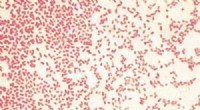
Here's a breakdown of why the S bacteria were virulent while the R bacteria were not:
* S bacteria (Smooth): These bacteria possessed a smooth outer capsule made of polysaccharides. This capsule protected them from the host's immune system, allowing them to multiply and cause disease (pneumonia in Griffith's case). They were therefore considered virulent .
* R bacteria (Rough): These bacteria lacked the smooth capsule, making them easily recognizable and susceptible to the host's immune system. They were unable to cause disease and were thus considered non-virulent .
Le point à retenir: The difference in virulence between the S and R bacteria was directly related to the presence or absence of the protective capsule. This capsule prevented the host's immune system from attacking the bacteria, allowing the S bacteria to thrive and cause disease.
Griffith's Experiment:
Griffith's experiment involved injecting mice with different combinations of these bacteria:
* S bacteria alone: Mouse died.
* R bacteria alone: Mouse lived.
* Heat-killed S bacteria: Mouse lived.
* Heat-killed S bacteria + live R bacteria: Mouse died.
The unexpected death of the mice in the fourth group was due to the transformation of the R bacteria into virulent S bacteria. The R bacteria had somehow acquired the ability to produce the capsule from the dead S bacteria. This discovery paved the way for the understanding that genetic information could be transferred between bacteria.